
A couple of years ago, my daughter was looking for local volunteer opportunities when she hit on the idea of helping at our local animal shelter. We have a history with the place, having adopted a few cats there, and it sounded like a great idea. So great, in fact, that I suggested she and I volunteer together. When my wife heard about that, her response was “don’t leave me out!”
And so, for a couple of years, we all went to the Dakin Humane Society in downtown Springfield every Sunday to help make life a little easier for the cats there. You can read about that adventure in a cute little profile they did of us.
Once Sophie started college, Laura and I continued our Sunday cat care routine for a little while, but we were getting bored with the pattern. Around that time, Dakin put out a call for more foster families. Like many animal shelters, they don’t have the capacity to hold all the animals that come in, especially during “kitten season” each summer. To house the surplus, and also to provide more comfortable lifestyles than the in-house cages can offer, they enlist dozens of volunteer foster families in the community.
Soon, we had a steady supply of short-term feline tenants coming into our house. They were restricted to our “kitten room,” a spare bedroom we’d equipped with food and water dishes and a litterbox. Sometimes they had to be medicated for various ailments, most often upper respiratory infections and digestive problems, and as we got more comfortable with the process we also started taking some that needed more complex treatments. Besides decreasing pressure on the shelter, foster care is an opportunity to get recently-weaned kittens stabilized and healthy so they can be adopted.

This year, though, the first two kittens we got in May were especially sickly. They were lethargic, needed daily fluid injections, had chronic diarrhea, and barely ate. When they started losing weight, we took them back to the veterinarians at the shelter, who discovered that they’d contracted feline panleukopenia virus (FPLV), also known as carnivore protoparvovirus 1.
FPLV is widespread in cats; most adult cats have antibodies against it, either from a prior infection with mild to moderate symptoms, or from the highly effective vaccine that’s part of standard veterinary care now. As a result, kittens are typically born carrying maternal antibodies against it. There’s a window of vulnerability, though, between the waning of maternal antibodies and their own vaccination at about two months of age, and when the virus manages to infect these youngsters, it can have a case fatality rate upwards of 90%.
So our infected foster kittens weren’t a danger to our fully vaccinated adult cats, but they had to go to Dakin’s kitten intensive care unit. Yes, the KICU is a real thing, and it has a pretty impressive track record in handling FPLV. The excellent veterinary staff there managed to save our two little kitty plague patients. They called to share the good news a couple of weeks later, saying the kittens had turned the corner and were gaining weight again.
Normally, a case of FPLV has two major consequences. First, the kittens have to stay in quarantine cages in the back section of the shelter until they’re adopted. They can’t go into another foster home because they’re still contagious, and they have to be isolated from the other kittens to avoid spreading this highly lethal pathogen. Second, if they had stayed in a foster home, that home is quarantined for a year. Parvoviruses are durable, virtually impossible to clean out of carpets and upholstery, and they take several months to break down and cease being a threat.
Knowing this, when the foster coordinator told me the bad news, I asked whether the recovered kittens could come back to stay with us until they were adopted, instead of sitting in quarantine cages. They were immune from FPLV thanks to their infection, and it since our room was already contaminated, having them shed more virus in there wasn’t a problem. She talked to the vets, who thought it was a great idea, and the little survivors returned in much better shape than they’d been before.
Sindel and Kenshi (the shelter assigns names in series, and these were part of a litter named after playable characters in Mortal Kombat) found adopters a couple of weeks later. We handed them off to their new families, then noted the quarantine date for our kitten room, and figured it might be next summer before we hosted any more kittens.
In July, we got another call: three more kittens had survived a brush with FPLV, and now needed a place to finish shedding the virus and await adoption. Would we be willing to house them until they were adopted? I didn’t have to think about the answer to that question.

And that’s how we became the official foster home for FPLV quarantined cats. Or, as Laura calls it, the FPLV Step-Down Unit.
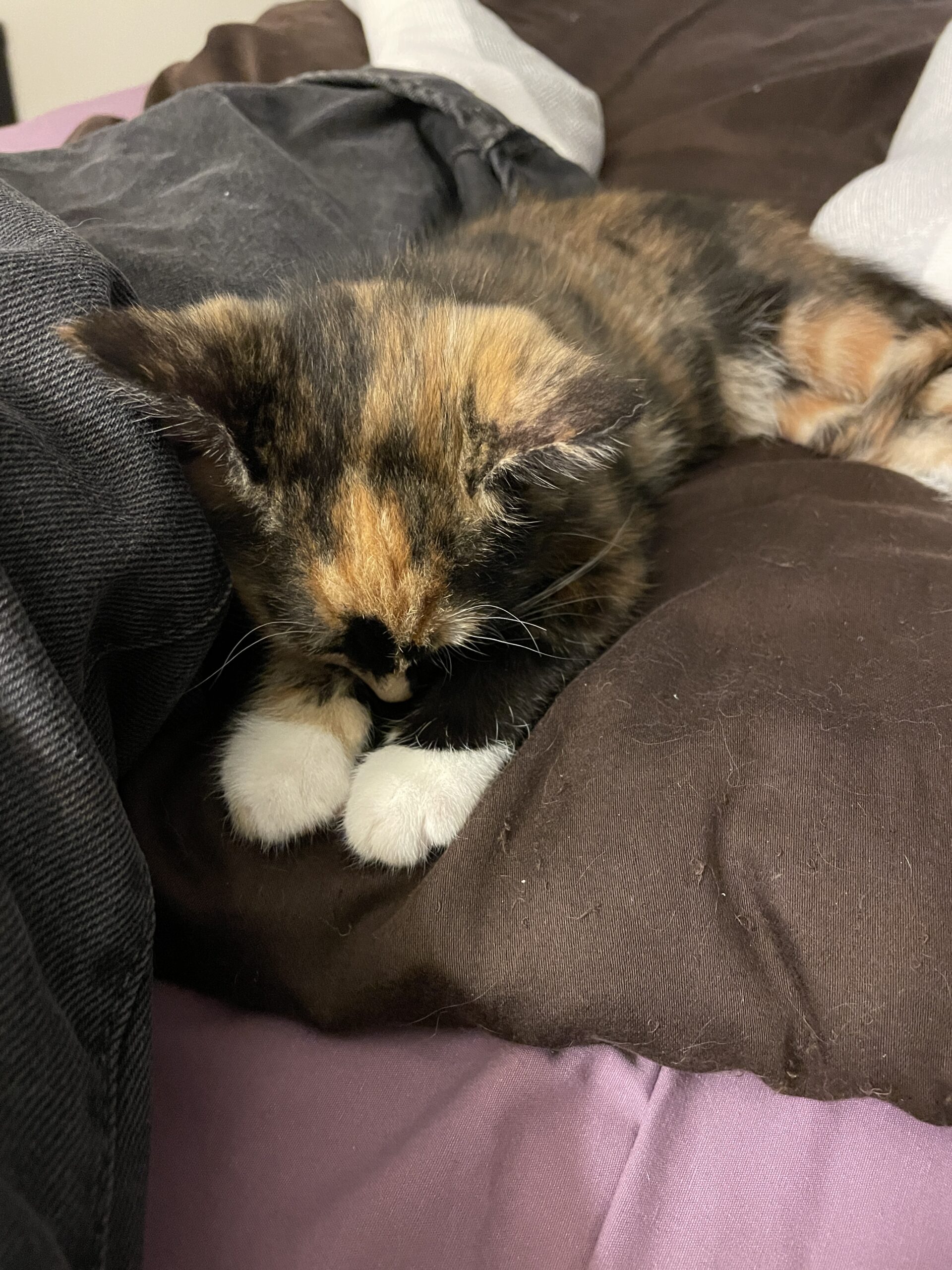
Not only were these three cute, they were also the most entertaining and affectionate litter we’ve fostered yet. I started sending a steady stream of adorable pictures to a family group chat, and in short order my niece asked if she could adopt two of them. Around the same time, a friend of ours came to visit and stayed in our guest room, which is also the kitten room. The next morning, he wanted to adopt the third one.

While this whole experience has been wonderful for us, it’s also been a boon for the shelter. Not only does it free up space, it gets these infectious kittens out of the facility entirely, which is even better isolation than the most rigorous quarantine ward. The disadvantage, and the reason I don’t expect many other foster families to start volunteering for this, is that now we can only host FPLV-recovering kittens, at least until late next July. We might get another batch this summer, or we might not, and if we do it’ll reset the quarantine clock even later.
If you have a spare room and like animals, give your local shelter a call and see about fostering. Even if you don’t end up in a specialized niche like we have, it’s a great use for extra space.
